
Change management is a cornerstone of organisational growth, and the statistic everyone quotes about it does not survive checking. The claim that 70% of change initiatives fail began as an explicitly “unscientific estimate” about reengineering in Hammer and Champy’s 1993 book, was disowned by Hammer himself two years later, and was later restated as settled fact without a citation. Reviewing five published instances of the claim in the Journal of Change Management, Mark Hughes found “no valid and reliable empirical evidence to support such a narrative”. What is better established is less quotable and more useful: traditional approaches fall short because they rely on frameworks that overlook a crucial element, human behaviour. To create lasting change, organisations must recognise that the most convincing ideas are the ones people believe they thought of themselves. Without this, resistance can grow entrenched, making even the most well-designed initiatives falter.
The Psychology of Resistance: Why People Get Stuck
Resistance to change is not just stubbornness; it’s deeply rooted in how people process threats to their sense of control, security, and identity. Traditional change management often exacerbates this resistance by introducing change as something external and imposed, which clashes with two key psychological dynamics:
1. Entrenched Beliefs: When people feel their views or roles are under threat, they often double down on their existing perspectives. This phenomenon, known as motivated reasoning, drives individuals to actively seek information that reinforces their current beliefs while dismissing contradictory evidence.
2. The Illusion of Ownership: Behavioural psychology suggests that people are far more likely to accept an idea if they feel it’s their own. Douglas Van Praet, widely recognised as an industry expert in unconscious behaviourism, captured this beautifully: “If you want someone to believe in your idea, you have to make them feel like it’s their idea.” Traditional change approaches, which dictate directives rather than encourage co-creation, strip employees of this sense of ownership, increasing resistance.
Traditional Approaches: Where They Go Wrong
1. Top-Down Imposition: Change often arrives as a decree from leadership, with rigid plans and KPIs handed down the chain. Employees, who may then feel sidelined or controlled, are more likely to resist than engage. This resistance is rooted in loss aversion, where the fear of losing something familiar outweighs the potential benefits of the change.
2. Lack of Psychological Safety: Resistance flourishes in environments where employees feel judged, ignored, or unsafe to voice concerns. Amy Edmondson’s research on psychological safety reveals that people are more likely to adopt new ideas in environments where they feel respected and heard.
3. Overlooking the Emotional Journey: Traditional methods emphasise logic and efficiency, assuming people will follow change if the rationale is clear. However, emotions drive human behaviour more than logic. Change programmes that neglect the emotional impact fail to address the deeper barriers to acceptance.
The Financial and Operational Costs of Failure
When change management fails, the costs are staggering:
– Lost Productivity: Disengaged employees, who often check out mentally during poorly managed transitions, cost the global economy an estimated US$438 billion in lost productivity in 2024 (Gallup’s State of the Global Workplace).
– Turnover and Recruitment: Frustrated employees are more likely to leave. The cost of replacing an employee is commonly put at around a third of their annual salary (Work Institute), and considerably more for senior or specialist roles.
– Reputational Damage: Failed initiatives harm internal morale and external reputation, making future change initiatives even harder to execute.
A Better Way: Shifting from “Imposed Change” to “Owned Change”
To overcome entrenched resistance and ensure successful change management, organisations need to shift their approach. Behavioural psychology offers a blueprint for making change a collaborative process, rooted in co-creation and emotional engagement.
1. Make Change Their Idea
People are far more likely to support change when they believe they’ve contributed to its design. Facilitation techniques such as workshops, brainstorming sessions, or experiential simulations allow employees to explore challenges and create their own solutions. This builds a sense of ownership, turning skeptics into advocates.
2. Start with Empathy and Trust
Leaders should begin by listening. Acknowledge concerns, understand fears, and demonstrate genuine care for employee perspectives. Trust is the foundation of buy-in. If employees don’t trust leadership, they are unlikely to trust the change.
3. Break Down the Journey
Change is daunting when presented as a monolith. By breaking it into smaller, manageable stages with visible successes, employees can experience the benefits in real time. This creates momentum and reinforces belief in the process.
4. Provide a Safe Space for Experimentation
Change often involves risk, and employees are more likely to embrace new ideas when they can experiment in a low-stakes environment. Experiential learning, such as simulations, allows individuals to test strategies and see the outcomes without real-world consequences.
5. Leverage Behavioural Insights
Use insights from behavioural psychology, such as nudging and positive reinforcement, to guide employees toward desired behaviours. Reward small wins to sustain motivation and show progress.
The Human Cost of Stubbornness
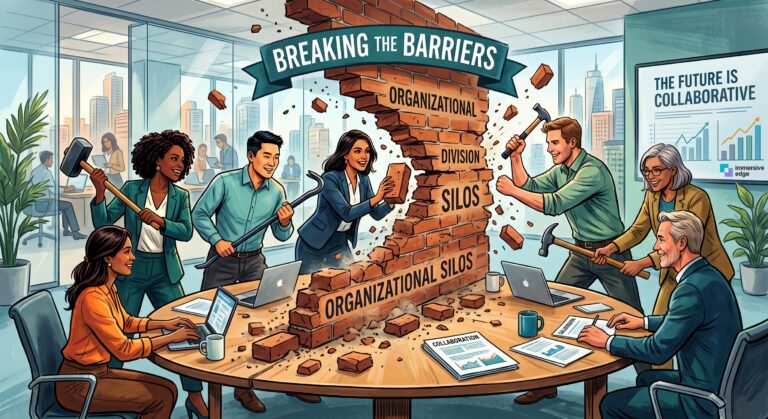
Ignoring the human need for ownership and respect can lead to organisational stagnation. Change efforts that impose solutions rather than invite participation don’t just fail – they deepen divisions. When employees feel ignored or dismissed, they don’t just resist; they dig in. This entrenchment creates silos, hinders collaboration, and leaves organisations vulnerable to disruption.
In Summary
Traditional change management can fail because it overlooks the human element. Change is not a linear process that can be imposed with logic alone. It’s a deeply personal journey, influenced by trust, emotions and a sense of ownership. When organisations focus on co-creation, empathy, and behavioural insights, they begin to unlock the power of true transformation.
The key to successful change is simple: engage people in a way that lets them come to the same conclusions you have. By building frameworks that empower employees to discover solutions for themselves, organisations can overcome resistance, align teams, and drive lasting success. Because the most powerful ideas aren’t imposed – they’re embraced.
Interested in how immersive experiential learning business simulations can help?